

Know your bladeFor buyers, sellers, lenders, investors and asset managers
Blade technical due diligence
Blades are the component of a wind farm most likely to produce a large unbudgeted cost, and the one a general technical review is least equipped to assess in the necessary depth.
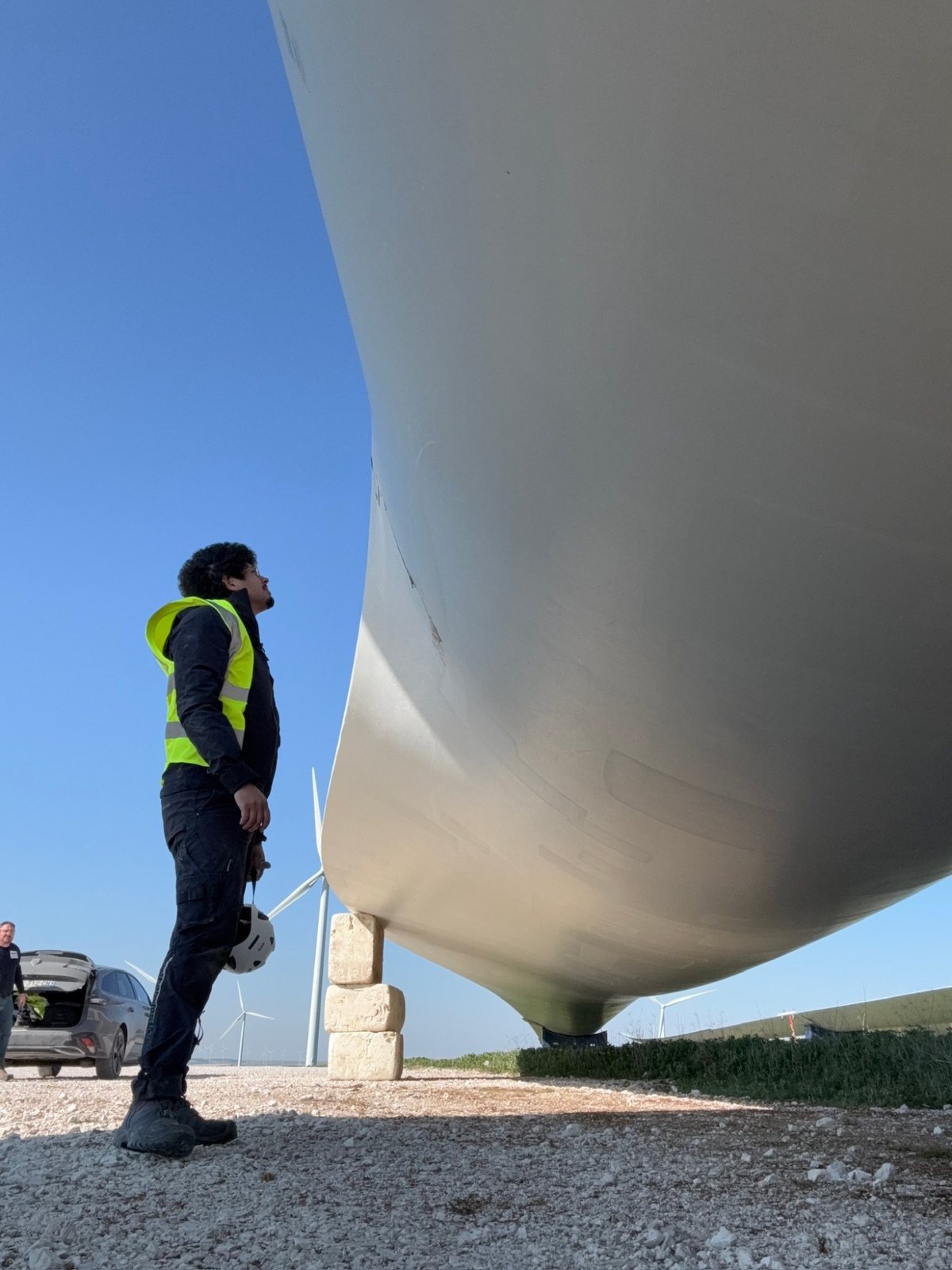
A general technical due diligence treats the blades as one item among many. A blade-specific review addresses the questions that determine the financial exposure:
- whether the blade type has a known structural weakness, and whether it affects this serial range
- what the inspection history actually shows, as distinct from what the reports state
- how much repair cost is already implied by the remaining life
- the warranty and contractual position on defects
The result is a risk position expressed in terms the transaction can use.
The same review is of value on the sell side. A seller who understands the blade exposure before the buyer does is better placed to defend the price.
Common questions
- What does blade technical due diligence cover?
- It covers the blade-specific risk in a wind farm: the blade type and its known issues, the inspection and repair history, the evidence of current condition, the remaining structural life and the contractual position on defects and warranty.
- How is this different from a full technical due diligence?
- A full technical due diligence covers the whole asset at a consistent depth. This is a deep review of the component that carries the largest single unbudgeted cost risk, and it is usually commissioned either alongside a full review or when the blade position is the open question.
Other services
Failure investigation & RCA
For insurers, loss adjusters, brokers, owners and operators
Design & structural assessment
For OEMs, blade manufacturers, repair companies and developers
Expert witness
For insurers, owners, lenders and their lawyers
Training
For owners, operators, OEMs, insurers and service providers